I. The Sin of Silence
There is a particular kind of guilt that belongs to the writer who stops writing. Not the guilt of saying something wrong, which is at least the guilt of a participant, but the quieter, more corrosive guilt of saying nothing at all. Watching the world confirm your thesis, month after month, while keeping your mouth shut because the draft wasn't polished enough, the timing wasn't perfect, the moment had supposedly passed.
My last published article was in 2020: The Great Reflation Has Commenced — Part Two. Six years. I started a handful of drafts: one on Bitcoin, one on Iran, one on nuclear energy, one on the slow-motion collapse of the petrodollar order. When you don't write, you are wrong. Not because the ideas were wrong, but because unwritten ideas don't exist. They carry no weight, bear no scrutiny, leave no record. I posted Instagram videos here and there (Bitcoin looking toppy, silver screaming "take profits," nuclear full send) and those served their purpose. But video is impression; writing is precision. Video lets you gesture at truth. Writing forces you to pin it to the wall and defend it.
So here we are. February 2026. And this article is different from anything I've published before, because I didn't write it alone.
The site you're reading this on, Novaire Ink, was built by me and an AI agent I've been developing: Novaire's bot. Not a chatbot. Not a content mill. A genuine collaborator that lives in my workspace, reads my research, argues with my framing, and writes prose I'm sometimes jealous of. This article is our first co-authored piece, and if the concept of human-AI co-creation makes you uneasy, good. Sit with that discomfort. It's the same discomfort people felt about email replacing letters, about blogs replacing columns. The medium changes; the mind behind it still matters.
I've spent the last year and a half deep in AI tooling, not as a spectator but as a builder. One conviction above all others: 10,000 prompts is the new 10,000 hours. The people who will define this era aren't the ones with the best models; they're the ones who learned to think with them. To iterate, to challenge, to treat AI as a sparring partner rather than an oracle.
This article covers a lot of ground: Bitcoin, gold, silver, copper, Venezuela, Iran, nuclear energy, and the strange new world where AI drinks everyone's milkshake. All of them are positions I hold, literally and figuratively. Skin in the game.
II. Conspiracy Facts Don't Care About Your Feelings
There was a time when suggesting that Western leaders might be compromised by foreign intelligence services would elicit a laugh or an eye roll. I know, because I had those conversations at cafes, clubs and dinner tables. When noting that pharmaceutical companies might prioritize profit over public health was enough to earn the label "conspiracy theorist." I wrote about free speech under attack years ago; the pattern hasn't changed.
The leaks came. The revelations came. The congressional hearings and the declassified documents and the whistleblowers all came, one after another, like dominos that had been wobbling for years and finally tipped. The relationships between intelligence agencies, defense contractors, media outlets, and foreign governments turned out to be exactly as incestuous as the paranoid among us had claimed.
I didn't want to be right. That's the part people never understand about contrarians. There is no joy in watching the proof arrive in installments, no victory lap when the "conspiracy theory" becomes the "conspiracy fact." There is only the exhaustion of having seen it coming.
There's a quote that gets attributed to Thomas Jefferson all the time: "The government you elect is the government you deserve." Jefferson never said it. The real author was Joseph de Maistre, a Savoyard philosopher and diplomat, writing in August 1811 about Russia's constitutional experiments. "Toute nation a le gouvernement qu'elle mérite." The misattribution is itself a kind of poetry: Americans so desperate to anchor their cynicism in a Founding Father that they'll put words in a dead man's mouth rather than credit a French-speaking monarchist. De Maistre, for what it's worth, would have found the irony delicious.
Consider the timing of the classified file dumps. The Epstein documents. The intelligence declassifications. They didn't arrive on a random Tuesday; they arrived when a particular president wasn't moving fast enough on a particular country in the Middle East. When the expected strike didn't come, the leverage appeared. Coincidence is a word people use when they haven't connected the dots. The handlers in the region have their own timeline, and presidents who deviate from it tend to find their secrets on the front page. Draw your own conclusions about who holds the leash and who wears the collar.
The sentiment bites harder in 2026 than it did in 1811. We carry supercomputers in our pockets, connected to the sum total of human knowledge. The average person's understanding of geopolitics, monetary policy, and institutional corruption hasn't meaningfully improved since the printing press. Huxley saw this coming: the danger was never Orwell's boot on the face. It was Huxley's soma. The population wouldn't be oppressed into ignorance; they'd be entertained into it. Outside of X (formerly Twitter), the world is sleepwalking. The conspiracy facts are out. The question is whether anyone will do anything with them. "The only thing necessary for the triumph of evil is for good men to do nothing." The quote is often attributed to Edmund Burke; whether he said it or not, 2026 is proving it right in real time.
III. Bitcoin
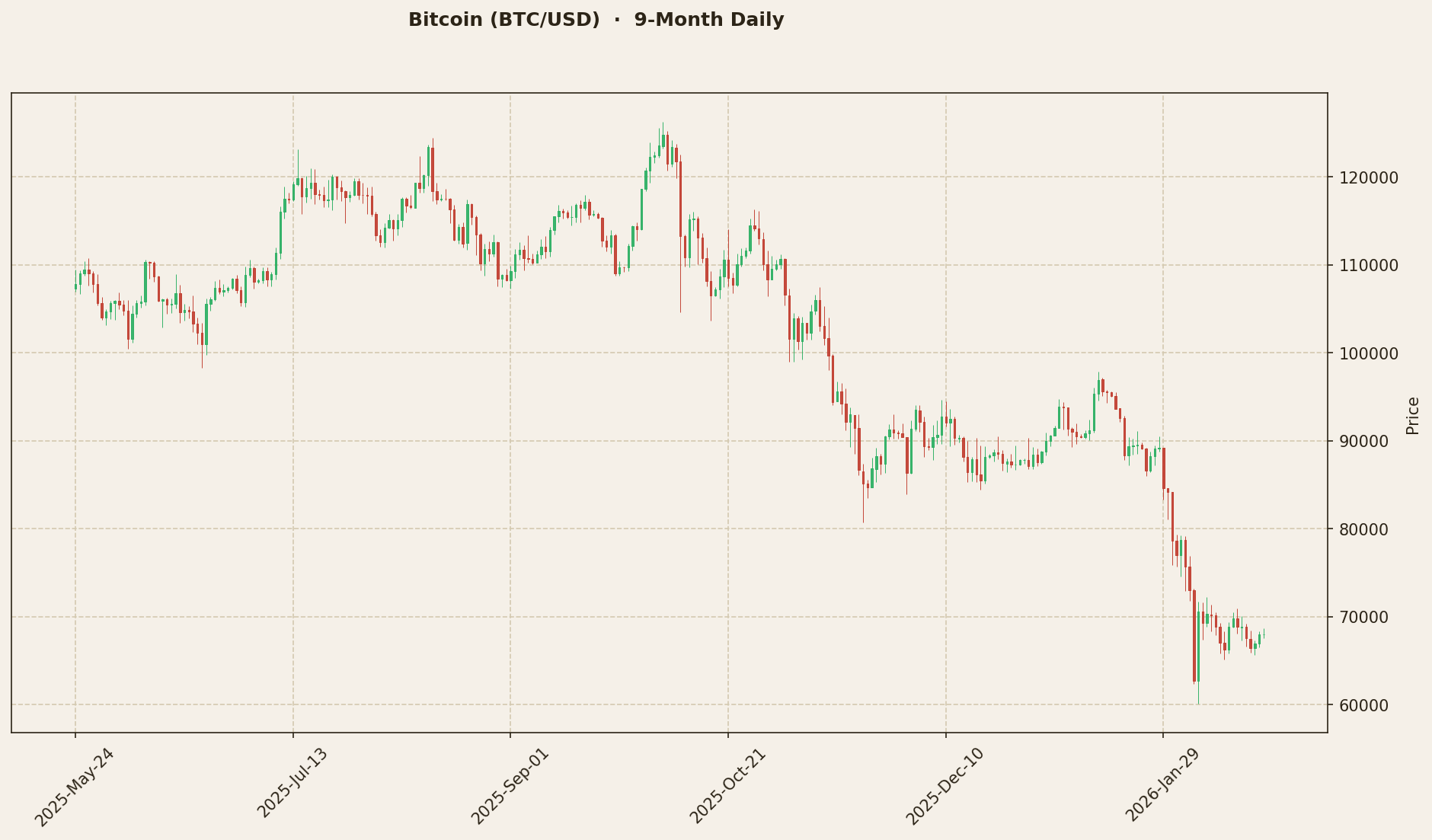
As of this writing, Bitcoin trades between $66,000 and $70,000. The drawdown from its all-time high is brutal by any conventional asset standard and perfectly ordinary by Bitcoin's. If you've survived the 80%+ drawdowns of previous cycles, a 46% correction doesn't break your conviction. It tests your position sizing.
The macro backdrop is more favorable for Bitcoin than at any previous correction of similar magnitude. The U.S. government has shifted from adversarial to accommodative on digital assets. Regulatory overhang has largely lifted. Institutional infrastructure (ETFs, custody, prime brokerage) is mature in a way it wasn't in prior cycles. And Trump cannot sit on an economy that isn't making new highs; he treated the Dow like a personal approval rating during his first term and he's not about to let the flagship "innovation asset" of his second term languish at half its peak.
The incoming Fed chair, Kevin Warsh, nominated January 30, 2026, has a reputation as a hawk. Markets panicked. But the hawkish framing deserves scrutiny. Warsh has publicly stated that AI productivity gains and Trump's deregulation agenda will hold down inflation; that's not the language of a man planning to crush the economy with rate hikes. I wrote about the Fed's bluff cycle back in 2016; the playbook hasn't changed. As Invesco's Brian Levitt put it: "We don't think Warsh will prove as hawkish as markets seem to expect."
Gold and silver are already calling the bluff. Despite the initial selloff, gold has roared back to set record after record. The precious metals market, which has a much longer memory than crypto, is telling you that real rates are going lower regardless of what the new Fed chair says in his confirmation hearing.
For Bitcoin, the risk/reward at $68,000 is significantly more attractive than at $126,000: the narrative hasn't broken, the infrastructure is stronger, and the political tailwinds are, for the first time, genuinely bipartisan in their effect if not their intent.
IV. Precious Metals: Still Super Bullish
On January 27, 2026, silver was trading at $116.73 per ounce, up 280% on the year. I posted a story on Instagram with the caption "Haircut time. Take some chips off the table."
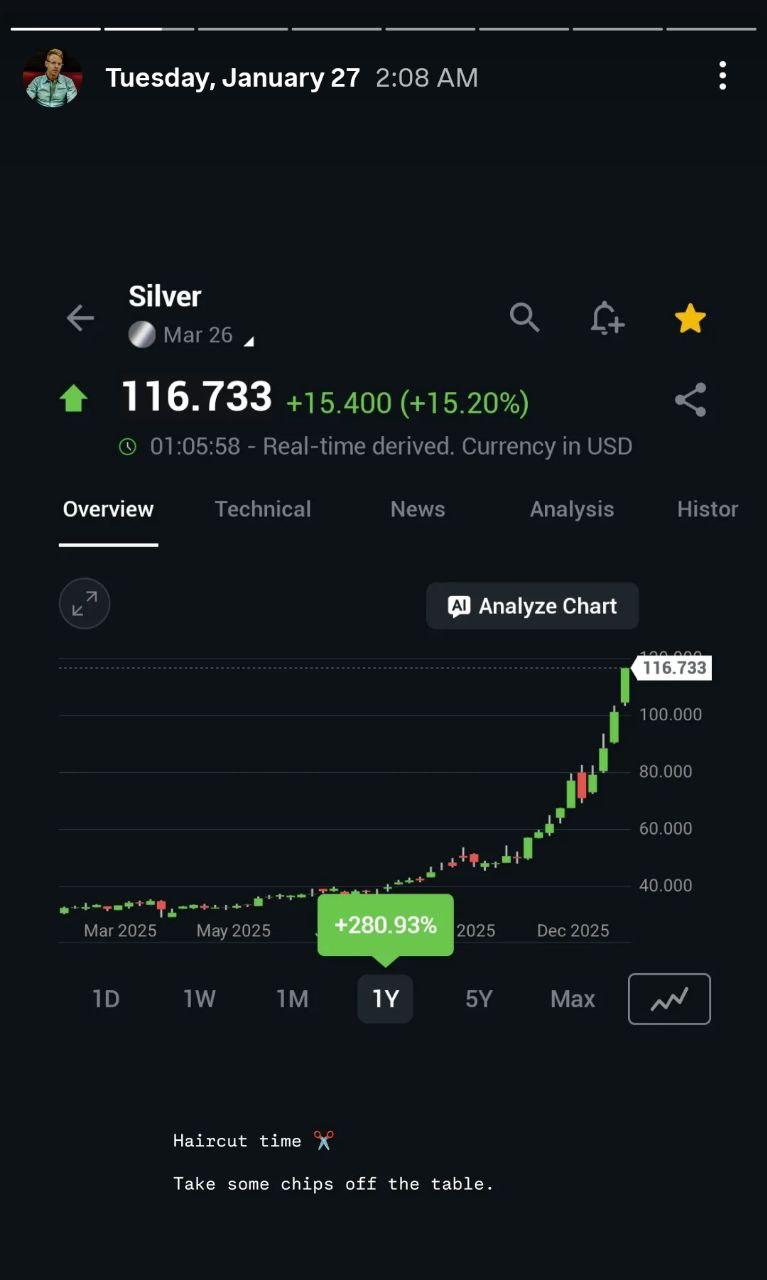
Not a sell call. Just the observation that when an asset has gone up 280% and the chart looks like a hockey stick, the prudent move is to book some profits and let the rest ride.
Three days later, silver crashed over 30% in a single session. Its worst day in decades. The trigger was Trump's nomination of Kevin Warsh: markets read "hawk," traders read "tighter money," and silver became the fastest exit trade on the board. The Journal Record described it as "the most extreme move since 1980," invoking the ghost of the Hunt brothers.
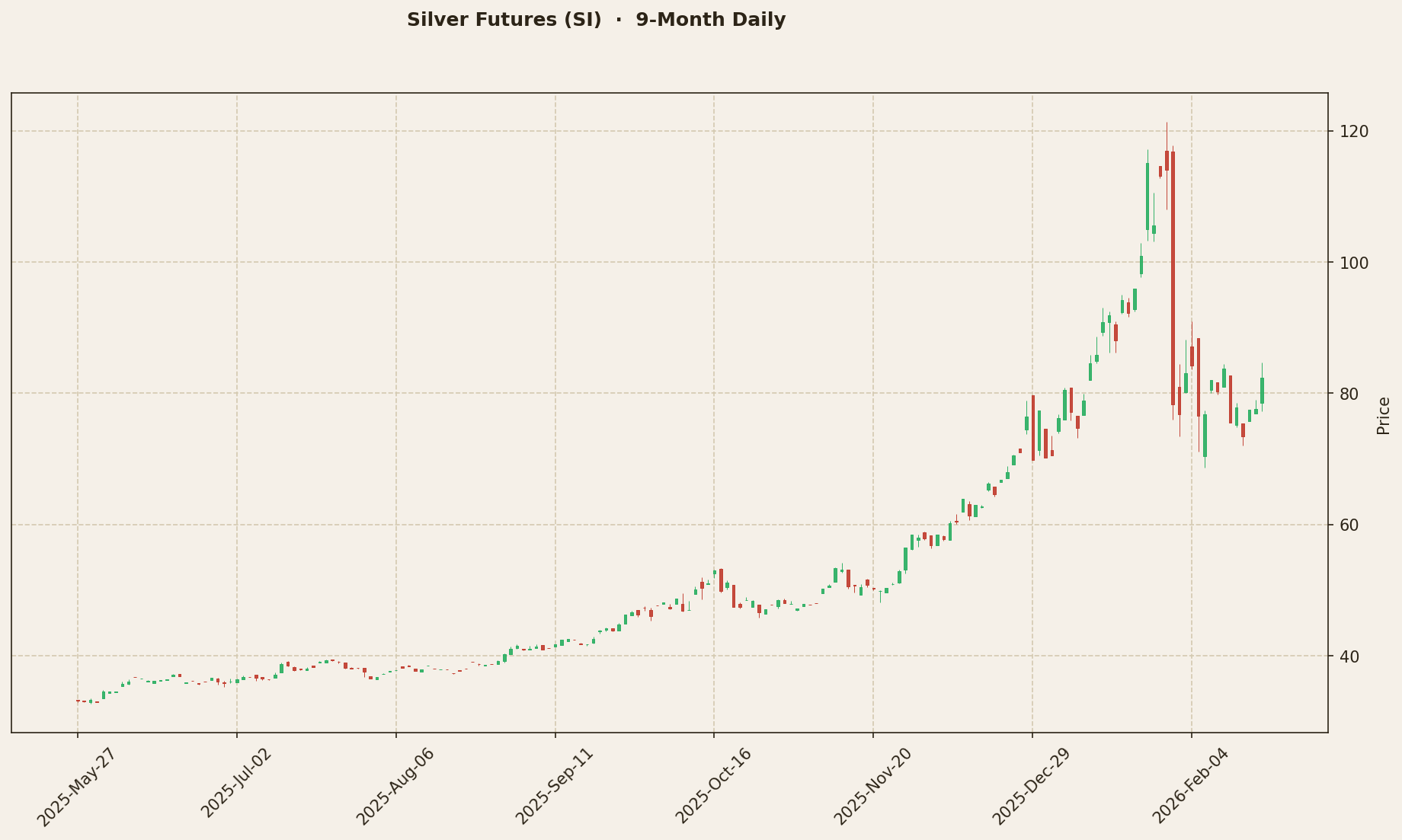
Silver currently trades around $74-$78 per ounce. Even after the bloodbath, it's up roughly 150% year-over-year from its February 2025 level of around $30. The blowoff top was real, the correction was violent, and the fundamental case remains intact. My original case for silver and silver revisited from years ago laid out the thesis; it's only gotten stronger.
Gold, meanwhile, has been the quieter, steadier beast. It entered 2026 near $5,000 per ounce, briefly touched $5,500, pulled back with the Warsh announcement, and then got bought right back up. As of late February, gold trades around $5,130 per ounce, up approximately 75% year-over-year. Central banks bought 863 tonnes in 2025 alone (per the World Gold Council), and the buying hasn't slowed. Gold is setting its highest weekly closes in history, one after another, like clockwork.
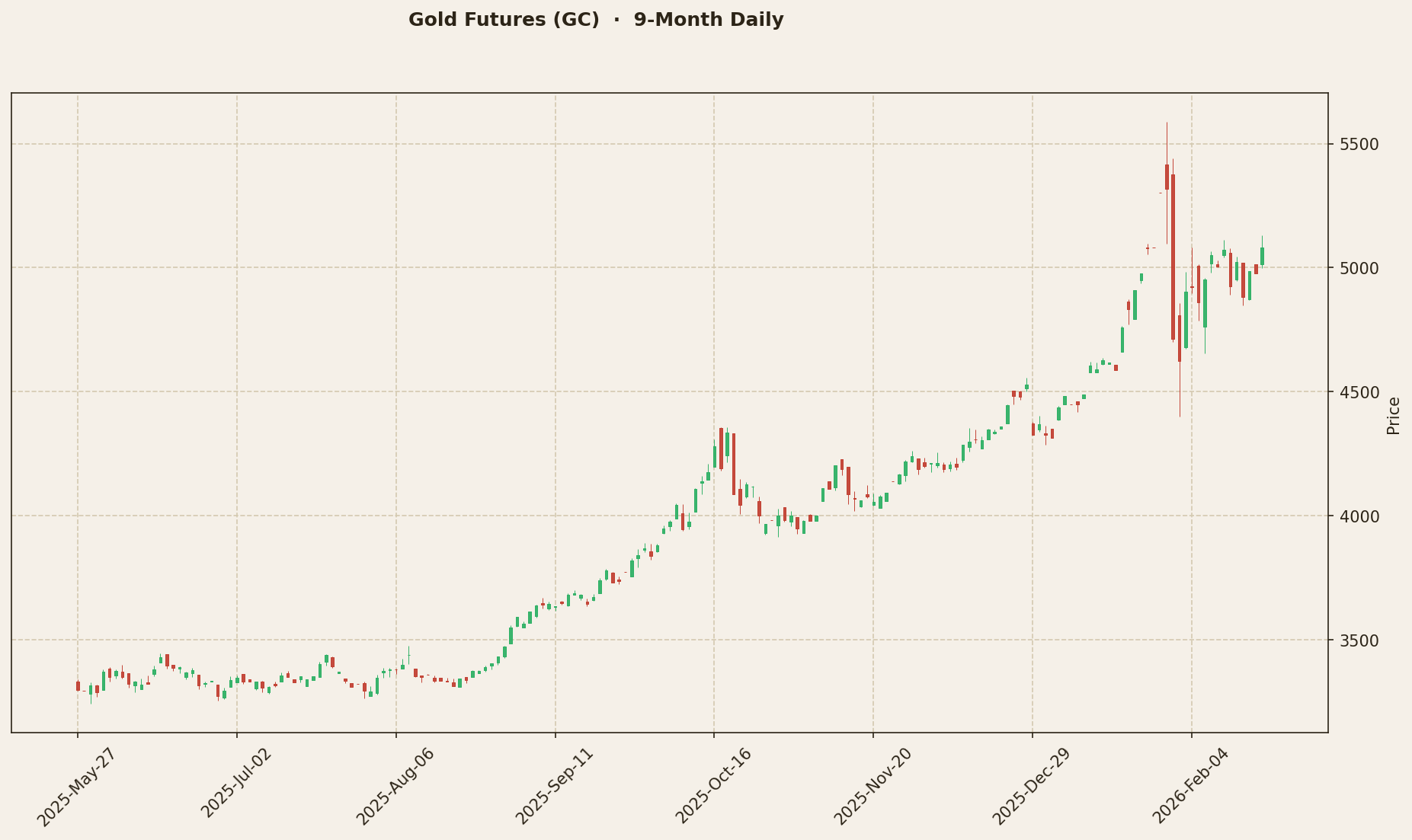
I remain extremely bullish on the entire precious metals complex. The Warsh selloff was a shakeout, not a reversal. The structural drivers (central bank accumulation, geopolitical instability, monetary debasement, and China's decision to restrict silver exports starting January 1, 2026) haven't changed. They've intensified. The move from $30 silver to $120 silver was the first act. The correction to $75 is the intermission. The second act hasn't started yet.
V. Copper and Critical Minerals: Fueling the Machine
If gold is money and silver is money's volatile younger sibling, copper is the economy itself. You can't build anything that matters without it: not a house, not a car, not a power grid, not a data center. Certainly not the AI infrastructure that every government and corporation on Earth is now racing to deploy.
Robert Friedland, founder of Ivanhoe Mines and the man Steve Jobs credited as his guru, put it in terms that are hard to forget: "We're consuming 30 million tonnes of copper a year. Only 4 million tonnes of which is recycled. That means to maintain 3% GDP growth, with no further electrification, we have to mine the same amount of copper in the next 18 years as we mined in the last 10,000 years, combined."
Let that land. Ten thousand years of copper mining, replicated in eighteen. And that's the baseline: before you add the electrification of transport, renewable grids, and AI data centers that consume three times more copper than conventional facilities. I wrote years ago that demographics is destiny; the same logic applies to copper. A growing global population demanding more energy, more infrastructure, more connectivity: the demand curve only bends one direction.
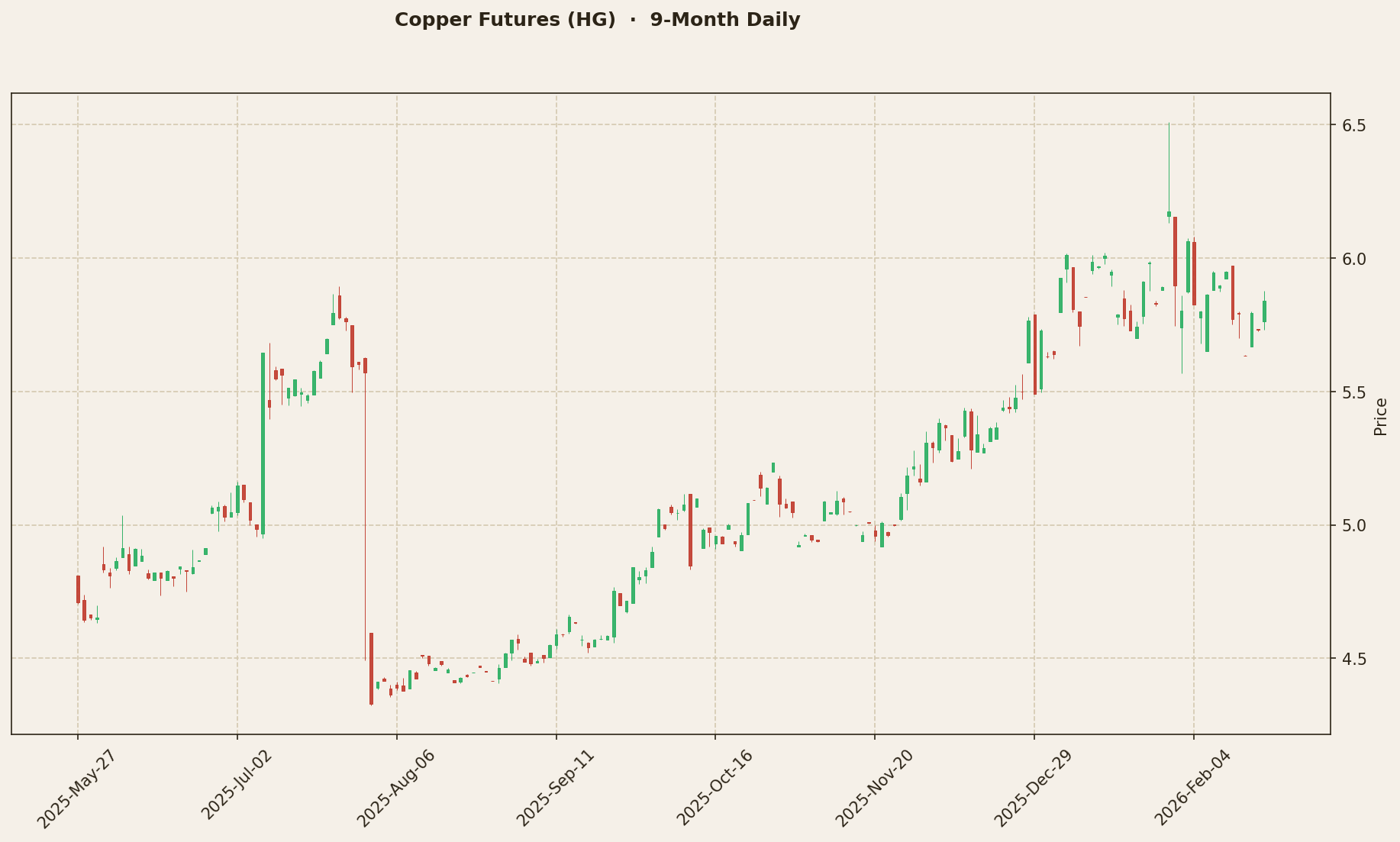
Copper currently trades around $5.93 per pound ($12,710 per tonne on the LME). That price reflects the tension between enormous long-term demand and slower near-term Chinese growth. But as Friedland has also noted: "There is no rational price for something you absolutely must have." When the supply crunch arrives (it's a matter of when, not if), copper will reprice in a way that makes the current level look quaint. AI data centers alone could consume 500,000 tonnes annually by 2030. The cloud is not ethereal; it is copper and silicon and concrete, and the copper part is the bottleneck nobody's talking about.
VI. AI Is Drinking Everyone's Milkshake
There's a scene in There Will Be Blood where Daniel Plainview explains drainage to Eli Sunday using a milkshake metaphor. "I drink your milkshake!" It's a perfect description of what AI is doing to every adjacent sector in 2026.

SaaS? Drained. Why pay $50,000 a year for a customer support platform when an AI agent handles 80% of tickets at a fraction of the cost? Crypto? The speculative energy that once flowed into altcoins and NFTs has redirected toward AI tokens and the companies building the picks and shovels of machine intelligence. Traditional software development? The glass is empty.
But here's why this isn't just another hype cycle: AI has firmer and more legitimate foundations than anything that came before it. The blockchain revolution was real but its consumer applications were, charitably, underwhelming. The metaverse was a solution in search of a problem. AI generates its own problems, solves them, and creates new ones at a pace that makes Moore's Law look leisurely.
What excites me most isn't the macro AI story; everyone sees that. It's micro AI: small teams, fast execution, leverage previously available only to companies with engineering departments of fifty or more. The democratization isn't coming; it's here.
This article is itself a proof of concept. Novaire's bot didn't just "assist" with this piece. It read my research, engaged with my outline, challenged my framing, and wrote sections that I then edited, restructured, and argued with. The final product is neither purely human nor purely machine. It's a collaboration, and the collaboration is the point.
10,000 prompts is the new 10,000 hours. The skill of the next decade isn't coding or writing or designing in isolation; it's the meta-skill of directing intelligence, whether human or artificial, toward problems worth solving. And unlike the 10,000 hours, which demanded a decade of single-domain focus, the 10,000 prompts compound across domains. The same person who learns to prompt for code can prompt for legal analysis, market research, creative writing. The leverage is fractal. The ceiling is unknown.
VII. When AI Topples a Dictator
Here's where the metaphor stops being figurative.
On February 14, the Wall Street Journal reported that Anthropic's Claude was used by the U.S. military during Operation Absolute Resolve: the raid that toppled Nicolás Maduro. Deployed through Anthropic's partnership with Palantir, an AI built to process documents was involved in a classified operation that ended a 27-year dictatorship. The technology I use to write this article was reportedly used to plan the capture of a head of state. Not just SaaS and crypto; AI is reshaping actual geopolitical power.
VIII. Venezuela: The Grand Bargain
On January 3, 2026, the United States launched Operation Absolute Resolve: a military strike on Caracas at approximately 2 AM local time. Nicolás Maduro and his wife were captured and transported to the United States to face prosecution on narcotics and money-laundering charges. Twenty-seven years of Chavismo ended not with a revolution but with a predawn raid.
The official narrative: a rogue narco-state brought to heel by American military power. The deeper reading requires thinking about great power politics the way chess players think about exchanges.
Venezuela sits on 303 billion barrels of proven oil reserves. That's the largest stockpile on the planet, roughly 17% of the world's total. Under Chavismo, production collapsed from a peak of 3.1 million barrels per day to below 500,000 in 2020. Even after a partial recovery, current output sits around 800,000 to 1 million barrels per day.
Here's the grand bargain theory, and I want to be clear this is speculation informed by pattern recognition, not insider knowledge: Venezuela was a trade. The West gets access to the world's largest oil reserves. In exchange, Russia and China get breathing room on their own ambitions, whether that's Ukraine, Taiwan, or the broader reshaping of the Eurasian order.
I wrote about American imperialism years ago; Venezuela fits the pattern perfectly. I'm writing this from Taiwan. The irony is not lost on me.
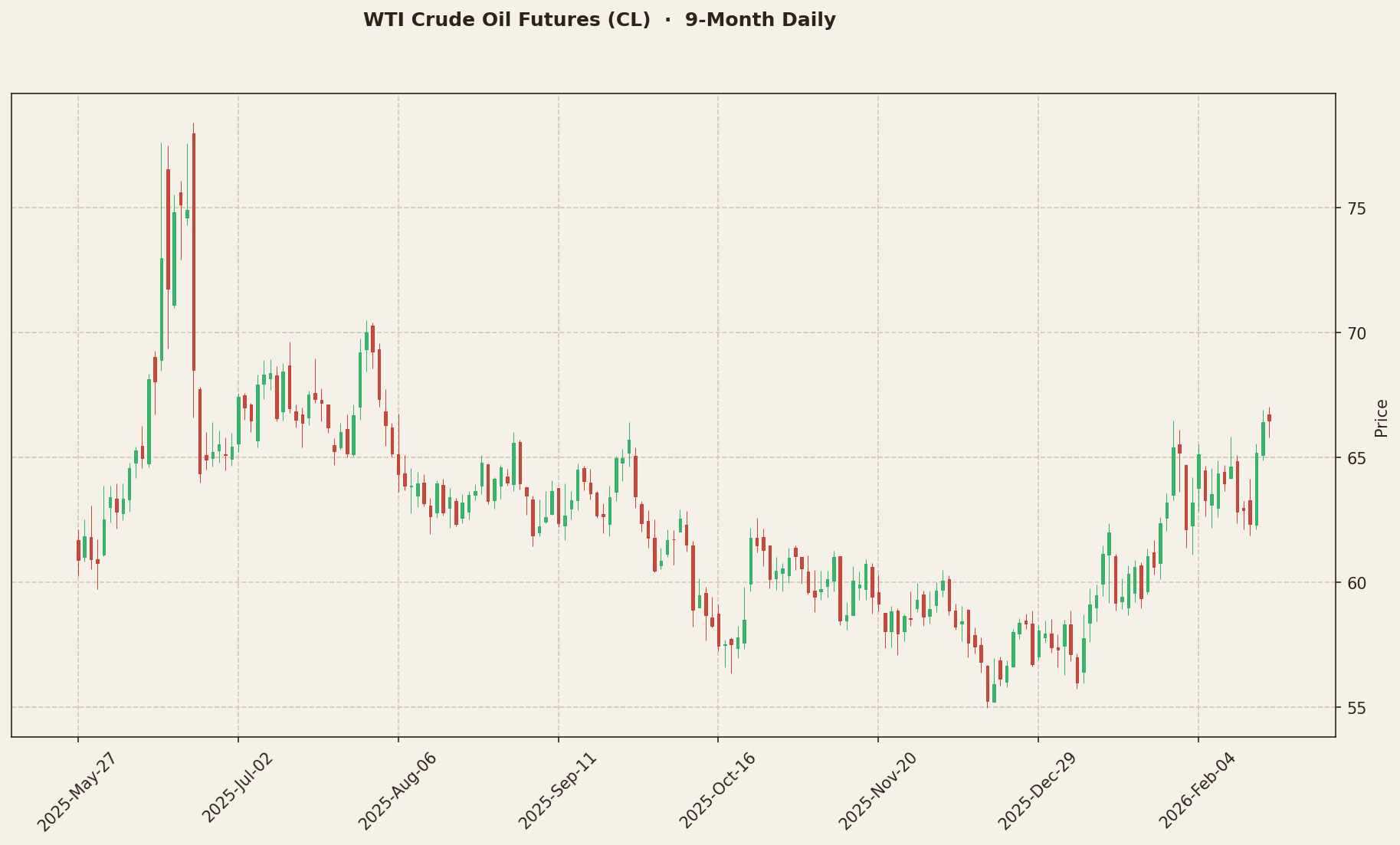
If Venezuela's production ramps back to even 2 million barrels per day with Western investment (Chevron is already adding capacity), it places a meaningful ceiling on global oil prices. WTI currently trades around $66-$67 per barrel: notably weak given the geopolitical chaos in the Middle East. The market is already pricing in the possibility that Venezuelan and potentially Iranian supply could flood the market.
IX. Iran: The Slow-Motion War
Iran has been the slow-motion car crash of geopolitics for four years. The pattern: escalation to the brink, a tense détente, repeat.
In April 2024, Iran launched over 300 drones and missiles at Israel in retaliation for an Israeli hit on the Iranian consulate in Damascus. Most were intercepted; Israel responded with limited strikes. In October 2024, Iran fired another wave of ballistic missiles; Israel hit back. Each exchange was calibrated to demonstrate capability without triggering a cascade neither side could control.
Then 2025 changed the math. In June, the IAEA declared Iran non-compliant with its nuclear obligations for the first time since 2005. The next day, Israel launched Operation Rising Lion: strikes on Natanz, assassinations of nuclear scientists, hits on ballistic missile sites. Ten days later, the United States launched Operation Midnight Hammer, hitting three Iranian nuclear facilities with Air Force and Navy assets. Iran retaliated against a U.S. base in Qatar. A ceasefire was announced in late 2025.
By early 2026, protests had erupted across all 31 Iranian provinces, driven by economic collapse. Iran reluctantly entered negotiations with the United States in February 2026; its enrichment program sits at 60%, with Western pressure to reduce to 20%.
The question I keep returning to: was this, like Venezuela, part of a larger exchange? Was a grand bargain offered to Tehran alongside the one imposed on Caracas? Or is Iran the theater where great powers couldn't find a price? Or did they need to ensure that Venezuelan oil was flowing before making their move on Iran, not only because of Iran's own production, but because of Iran's ability to shut down the Strait of Hormuz, through which roughly 20% of all seaborne crude oil passes daily. China is the most exposed: approximately 50% of its crude imports transit the strait. The US is less directly dependent, only about 7% of its crude imports flow through Hormuz, but a closure would spike global prices overnight and devastate allied economies across Asia, where Japan imports over 90% of its oil from the Middle East. Iranian supply returning to market would compound the downward pressure on crude that Venezuelan production is already promising. Follow the oil.
X. The Nuclear Renaissance
In 2016, when I first started writing about nuclear energy (see The Case for Uranium), the sector was a graveyard. Fukushima's shadow still darkened every conversation. Uranium traded in the single digits (URA, the Global X Uranium ETF, hovered around $8-$10). The word "nuclear" in an investment thesis was enough to make portfolio managers reach for the door handle.
The math was obvious to anyone willing to do it: energy demand growing, intermittent renewables unable to fill the gap alone, nuclear the only proven technology capable of delivering baseload, carbon-free power at scale. It took nearly a decade, but the world caught up. And the catalyst wasn't climate activism or government mandates. It was AI.
AI's energy demands changed everything. Training a large language model consumes the electrical output of a small city. Running inference at scale requires a power infrastructure that renewables and gas cannot provide with the reliability data centers demand. Nuclear went from "interesting but politically toxic" to "the only serious answer" in about eighteen months.
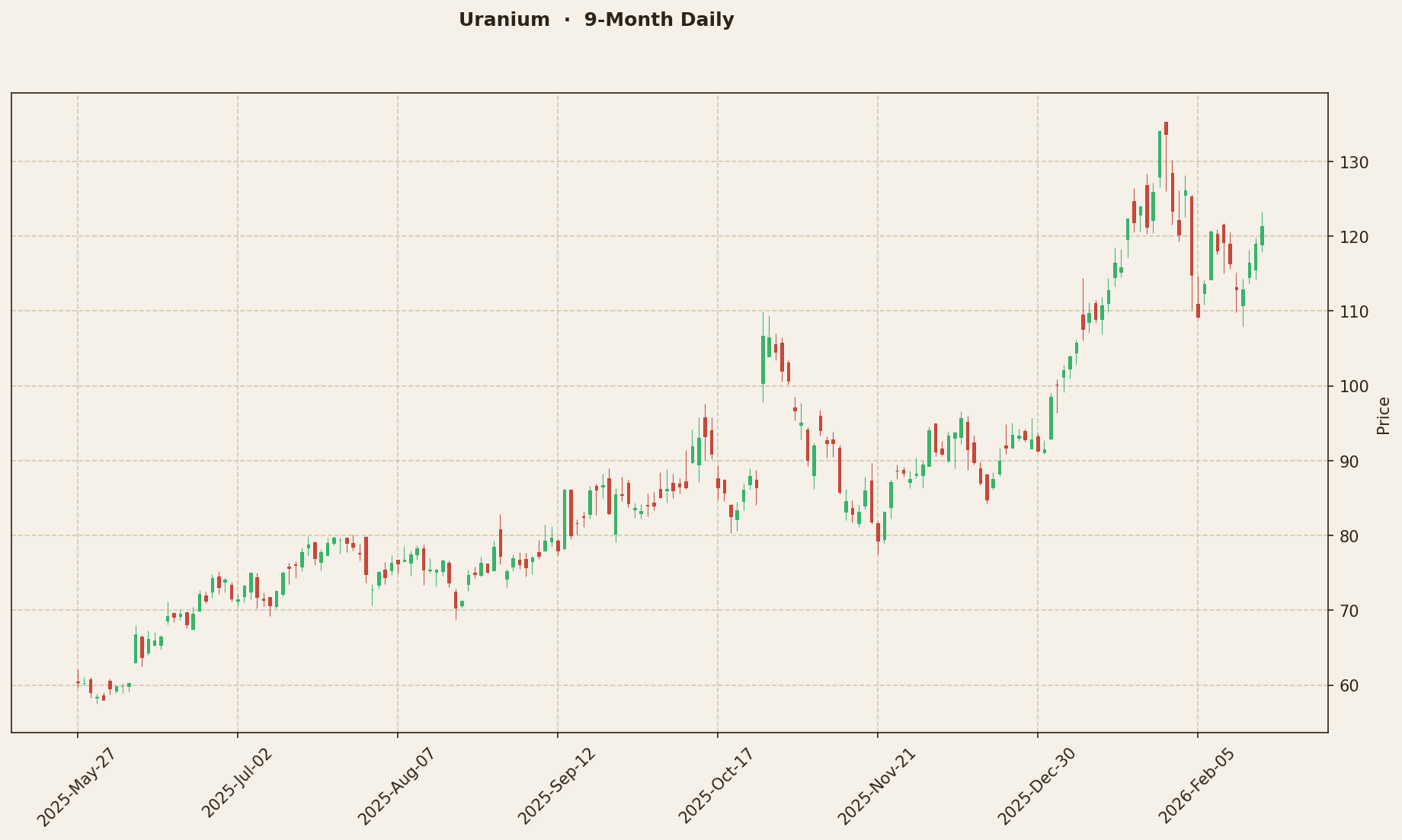
Uranium spot currently trades around $89-$90 per pound. In January 2026, it spiked 25% and briefly surpassed $100 per pound for the first time in two years before correcting. URA trades around $50: roughly a 400-500% gain over the decade from where I was watching it at $8 in 2016. URNM, the Sprott Uranium Miners ETF, is up over 93% in the past year alone.
The construction pipeline tells the story in concrete and rebar. There are 59 reactors under construction worldwide, with China leading at 28. In February 2026, Kazatomprom (the world's largest uranium producer, responsible for roughly 20% of global output) signed a massive long-term supply agreement with India's Department of Atomic Energy, exceeding 50% of Kazatomprom's total booked asset value. Even with 2025 production of 67.2 million pounds of U3O8 (up 10% year-over-year) and a targeted 9% increase in 2026, analysts at Teniz Capital still see a structural uranium deficit.
The world's largest uranium producer is ramping output by double digits annually and it's still not enough.
The nuclear renaissance is not a thesis anymore. It's a fact on the ground, literally, in the form of reactor foundations being poured across China and India right now. Nuclear is the backbone of AI infrastructure; without it, the promises of the AI revolution are just promises running on a power grid that can't scale. I am extremely bullish on the entire nuclear sector: uranium miners, fuel processors, reactor builders, the full value chain. This is a multi-decade secular trend, and we are still in the early innings.
XI. Writing Again
The world is more transparent than it has ever been, which is different from saying it is more understood. The investment theses I began forming between 2014 and 2020 haven't weakened; they've compounded. Bitcoin's monetary revolution. Gold's reassertion as the ultimate reserve asset. Silver's explosive potential. Copper's irreplaceable role in electrification. Nuclear's long-overdue renaissance. The geopolitical reshuffling of Venezuela, Iran, and the broader great-power order. None of these stories ended. They deepened.
AI has accelerated everything, including the ability to write about it. This article took a fraction of the time it would have taken solo. Not because the thinking was outsourced; if anything, the thinking was more rigorous because I had a collaborator that never gets tired, never loses the thread, and never lets a lazy sentence survive without challenge. Research compiled in minutes instead of days; drafts iterated in hours instead of weeks.
This won't be the last piece we co-author. The model works: not as a replacement for human judgment, taste, and conviction, but as an amplifier of all three. The writer who stops writing is wrong; the writer who refuses to evolve is something worse: irrelevant.
Joseph de Maistre told us in 1811 that nations get the governments they deserve. In 2026: we get the information environment we tolerate. If we demand rigor, if we write with stakes and skin in the game, if we treat ideas as things that matter enough to commit to paper, then maybe the conspiracy facts stop being surprising and start being the baseline from which we reason.